In business, there’s a classic framework known as the “Triple Constraint.” It suggests that you can have something fast, cheap, or high-quality—but you can only ever pick two. While this applies to everything from product manufacturing to interior design, it is especially true for SEO.
When you’re overseeing a digital strategy, understanding how these three pillars balance out is the only way to set realistic goals and prevent your SEO efforts from hitting a dead end. Here is a breakdown of how these combinations actually play out in a marketing budget.
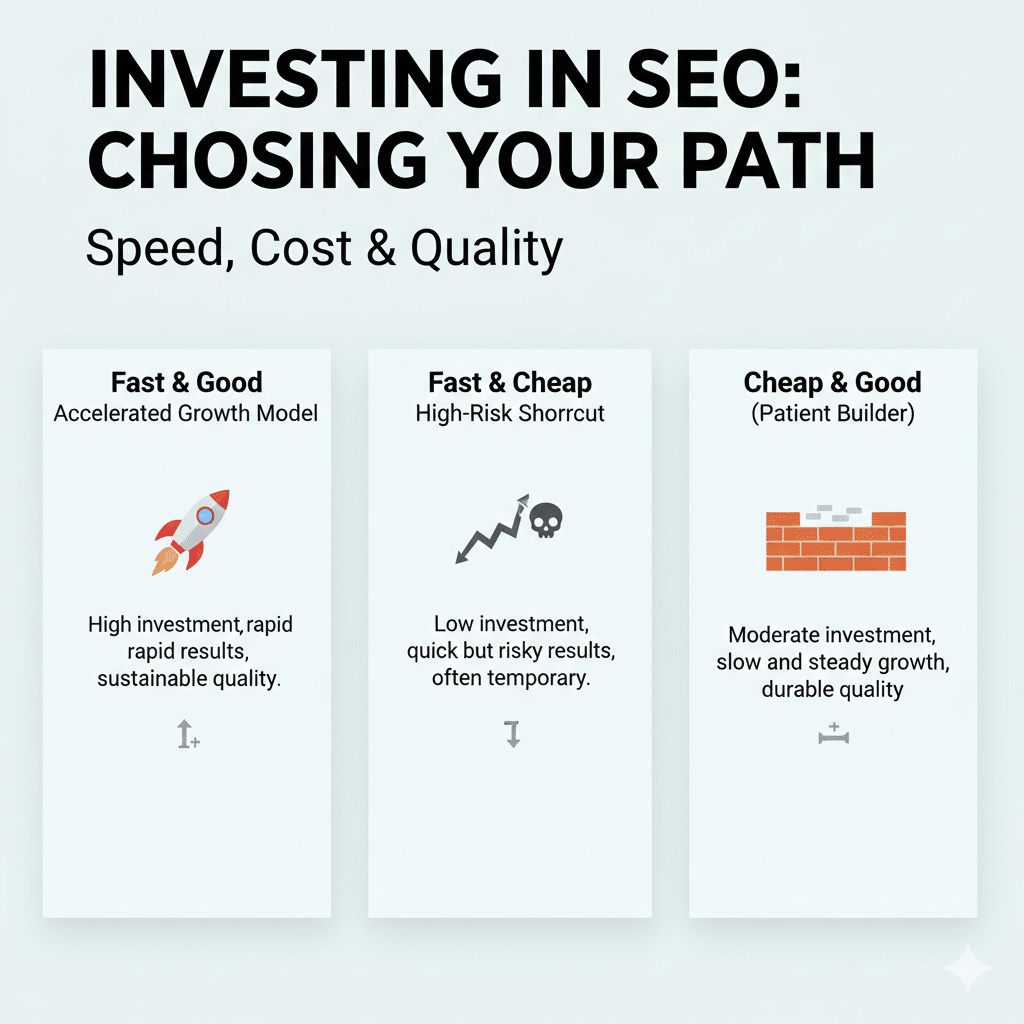
Fast and Good (The Accelerated Growth Model)
If the goal is to see significant movement in the search rankings quickly without sacrificing the integrity of the brand, you have to be prepared to invest. This isn’t just about paying for a service; it’s about the sheer volume of high-level resources required to move the needle.
To get results fast while maintaining quality, a brand needs a multi-pronged approach: high-velocity content production, an expert technical team to optimize the site’s infrastructure, and a sophisticated PR strategy to earn authoritative mentions. It’s a powerful way to capture market share, but “cheap” is never part of this equation.
Fast and Cheap (The High-Risk Shortcut)
This is the scenario every business leader should avoid. When a provider promises immediate SEO results at a bargain-basement price, they are almost certainly using shortcuts that will eventually backfire.
This approach usually relies on automated content or outdated “black hat” tactics that might trigger a temporary jump in traffic. However, search engines are designed to catch these manipulations. When they do, the resulting penalties can be devastating, often leading to a total loss of search visibility that costs far more to fix than the initial “savings” were worth.
Cheap and Good (The Patient Builder)
This is a common and effective path for many growing companies. You can absolutely execute a high-quality SEO strategy on a tighter budget, but you have to trade away speed.
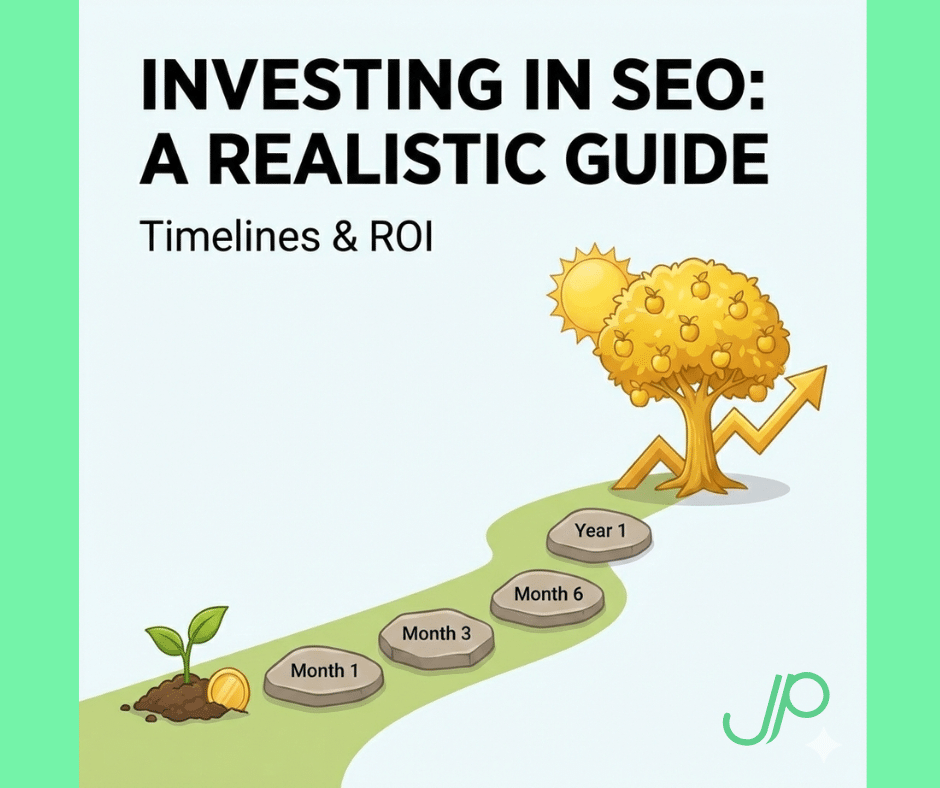
If you aren’t able to fund a massive “blitz,” the alternative is a slow and steady approach. This means focusing on one or two high-impact pieces of content a month rather than ten, and gradually building your digital authority over a year or two. It’s a sustainable, legitimate way to grow, but it requires stakeholders who have the patience to wait for the compound interest of SEO to kick in.
Why the “Unicorn” Doesn’t Exist
It’s tempting to search for the “SEO Unicorn”—a strategy that is fast, inexpensive, and high-performing. In reality, that combination doesn’t exist. SEO is inherently competitive and relies on external platforms (like Google) that no one truly controls. Because you are competing against every other brand in your space for a limited number of top spots, success requires either a significant time commitment or a significant financial one.
Aligning Your Strategy with Your Goals
The goal isn’t to suggest that SEO is impossible; it’s to ensure your expectations match your investment. When planning your next roadmap, it’s helpful to be transparent about which two pillars you are prioritizing:
- If the budget is the priority: Expect a longer timeline (6–12 months) before seeing a major ROI.
- If the deadline is the priority: Secure the budget necessary for a high-intensity push.
- If you are offered both speed and low cost: Tread carefully, as the long-term risk to your brand’s reputation is likely not worth the gamble.
Ultimately, successful SEO is about resource management. By choosing your two pillars early, you can build a strategy that actually delivers growth instead of chasing a “perfect” scenario that isn’t grounded in reality.